

CVD Risk Score
Starting 2027, the eHealth Station™ calculates a person's 10-year risk of cardiovascular disease (CVD) and type 2 diabetes (T2D) without a blood test, with accuracy comparable* to SCORE2 and Framingham.
*Performance claims are based on internal validation, not external validation.
10-year cardiovascular disease risk score from one 15-minute check using the eHealth Station™
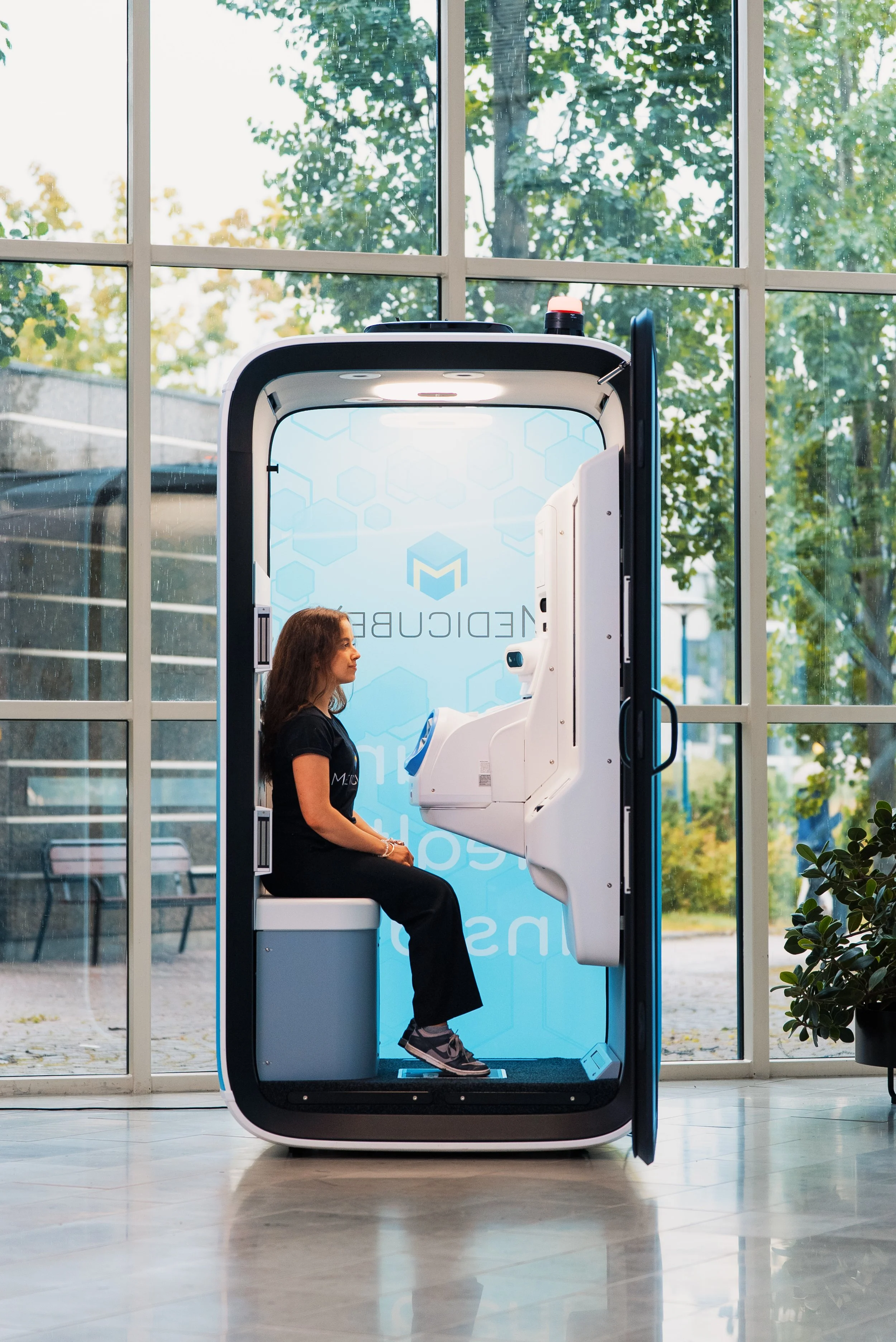
Self-service, non-invasive CVD Risk Score
Step 1: User steps into the eHealth Station™ and they answer questions regarding medical history as well as lifestyle-related questions.
Step 2: The user performs the non-invasive measurements guided by the on-screen instructions in the privacy of the eHealth Station™.
Step 3: The user gets their results printed, and receive their risk calculations for getting a cardiovascular disease within the next 10 year.s

MedicubeX CVD Risk Score -AUC 0.80
The individual 10-year probability of cardiovascular disease, calculated from the eHealth Station's measurements without a blood test. It gives the total risk and the risk for each of the four diseases:
Heart attack - AUC 0.82
Stroke - AUC 0.80
Heart failure - AUC 0.80
Peripheral artery disease - AUC 0.76
What is AUC? Area Under the ROC Curve: how well a model separates people who will develop a disease from those who won't, across all possible thresholds. 1.0 is perfect, 0.5 is no better than a coin flip.
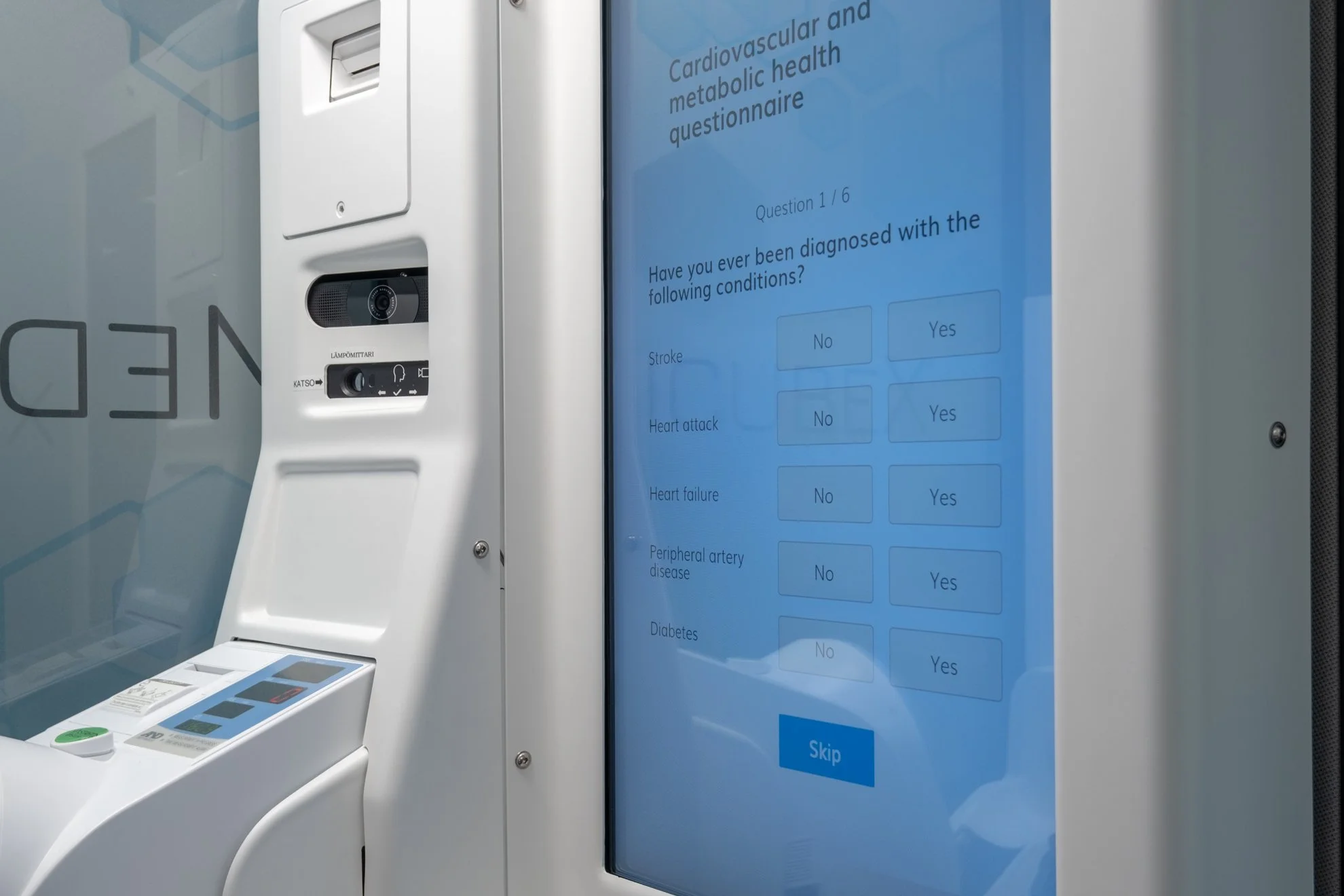
Step 1: Step into the eHealth Station™ and answer the questionnaire
Fill in a questionnaire regarding your medical history and cardiovascular disease related symptoms.
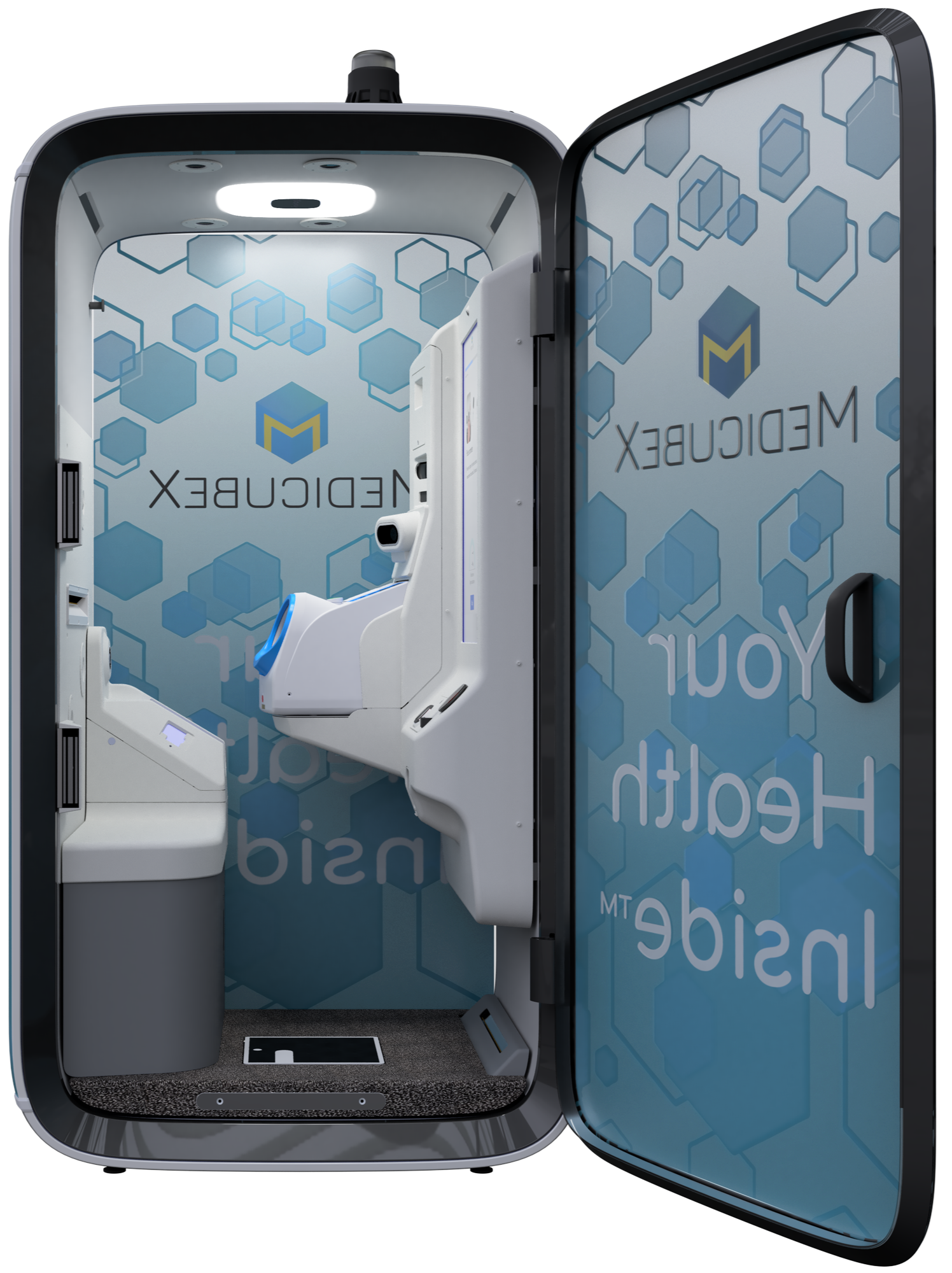
Step 2: 9 non-invasive measurements in 5-10 minutes
Heart auscultation for heart valve defect detection (2027)
ECG, HRV, HR, rhythm analysis, arrhythmia detection
Blood pressure
AGE Reader: Risk of CVD and T2D
Körperfett, Grundumsatz
Gewicht
Sauerstoffsättigung
Atemfrequenz
Körpertemperatur
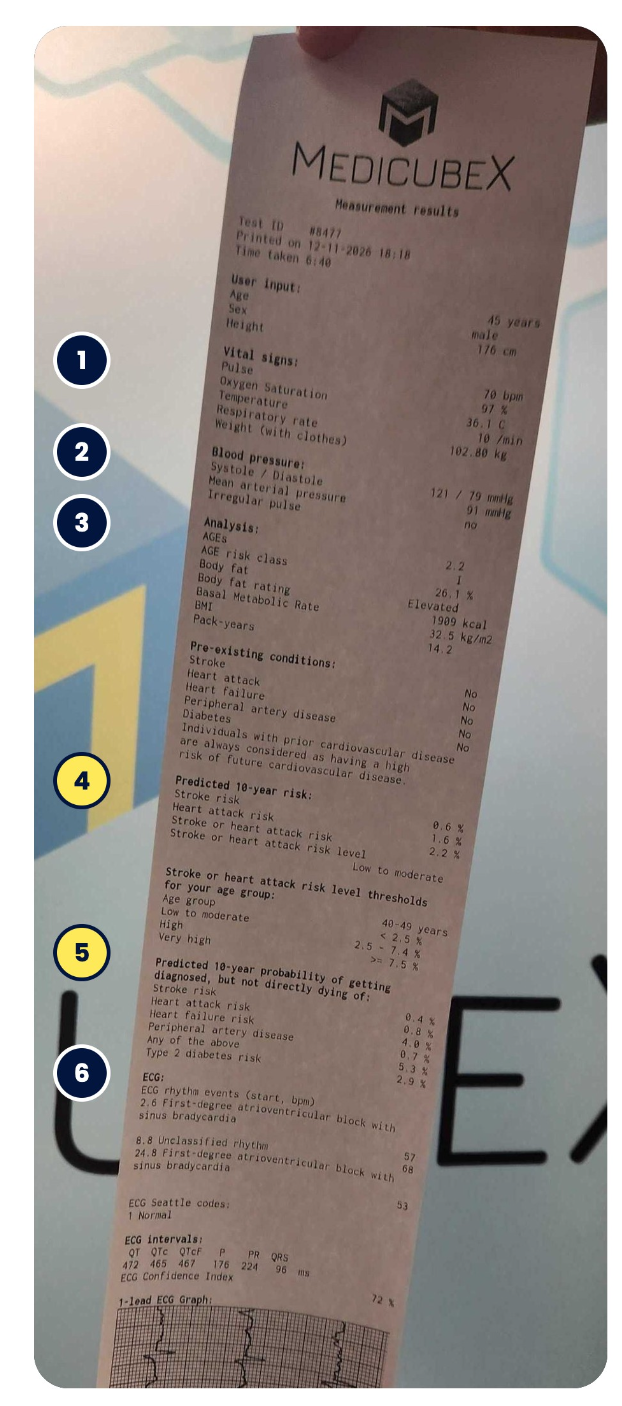
Step 3: Get your results – they can be integrated into any EHR system
What you see on the printout:
Vital signs
Pulse, oxygen saturation, temperature, respiratory rate and weight
Blood pressure
Systolic and diastolic pressure, mean arterial pressure and detection of irregular pulse
Analysis
AGEs, body fat, basal metabolic rate and BMI
CVD risk score: stroke and heart attack
Predicted 10-year risk, including dying of the disease, with a risk level for the person's age group
Heart failure, PAD and T2D risk score
10-year probability of being diagnosed with heart failure, peripheral artery disease and type 2 diabetes
EKG
Rhythm events, ECG intervals and a 1-lead ECG graph
Parts 4 and 5 are new in 2027, subject to regulatory approval. The CVD and T2D risk scores launch as features of an upcoming MDR IIa medical device. They are risk estimates, not diagnoses: elevated risk is flagged and guided to healthcare professionals. Results also go straight to the patient record.
Benefits of bloodless CVD Risk Score
Preventive health checks for everyone, wherever they are

Risks such as cardiovascular disease and type 2 diabetes are found early, without adding to healthcare staff's workload
Low-risk individuals become aware of their own health
eHealth Stations™ go where people already are: pharmacies, workplaces, shopping centers and rural areas. Their data can be integrated automatically to any ERH systems
Society saves on healthcare costs in the long run, as high-risk patients are found early enough to avoid the situation escalates into, for example, heart surgery
MedicubeX data is directly integrable with any system that runs on FHIR, including platforms like InterSystems IRIS.
This establishes a unified end-to-end chain that routes data directly to health records and healthcare professionals for evaluation, eliminating data silos across separate systems.
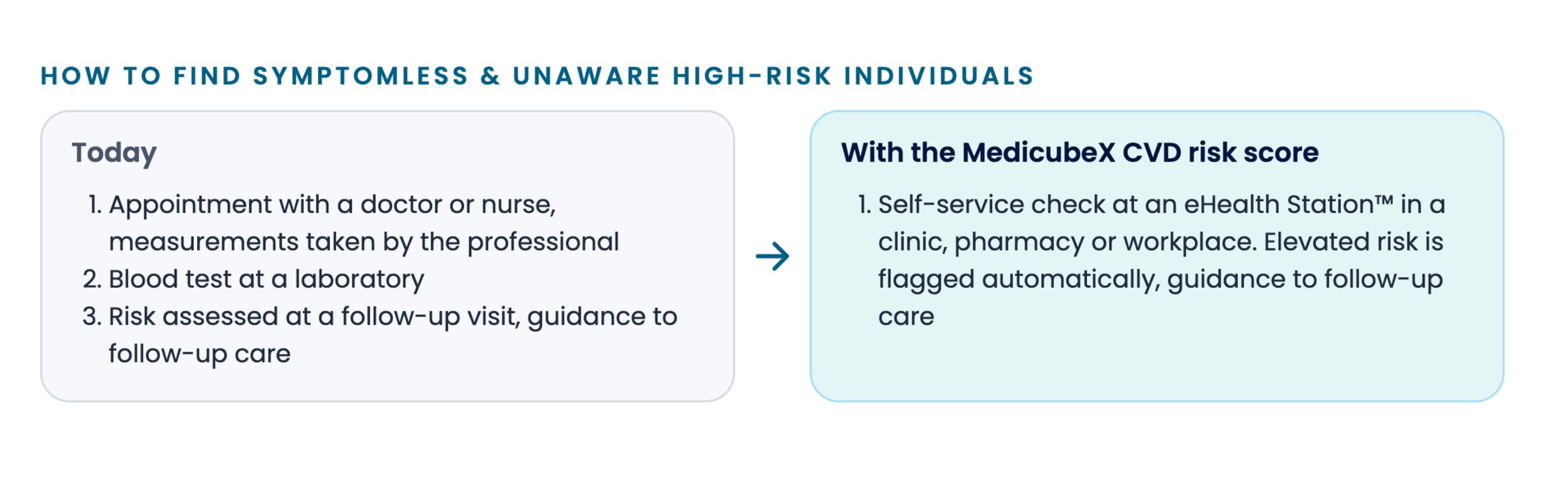
Detecting CVD Risk at Scale: EU Safe Hearts Plan
Cardiovascular disease is the leading cause of death in the European Union. It takes 1.7 million lives every year and costs the EU economy over €282 billion annually. Yet around 80% of cardiovascular disease is preventable.
The European Commission's plan for cardiovascular health puts prevention, early detection and regular health checks at its centre. In 2027, all European countries need their own plan for making the following health checks a reality – each year.
What the EU Safe Hearts Plan means for different countries?
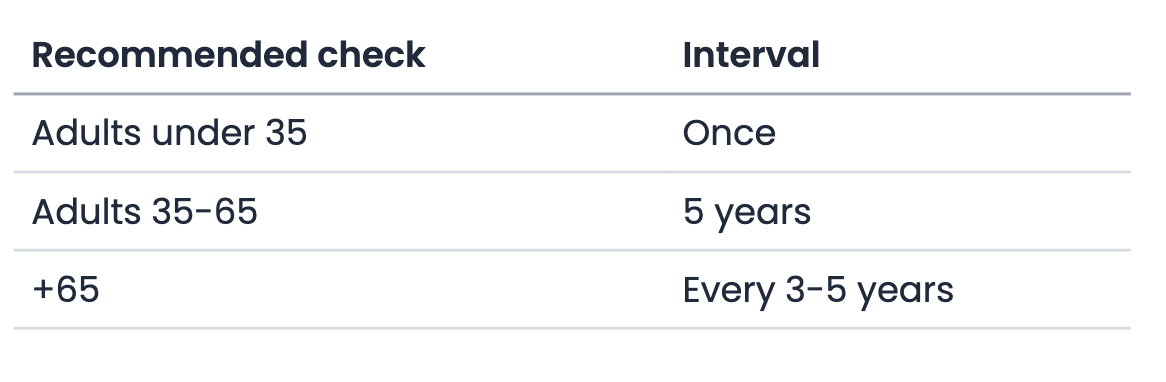
As te EU commission’s proposal sets out an age-based approach to health checks, adapted to each person’s risk:
Under 35: at least one health check
35–64: a check at least every 5 years
65 and over: a check every 3 to 5 years
Each check covers key risk factors such as blood pressure, cholesterol, blood sugar, kidney function and body measurements, along with lifestyle and family history.
The proposal also looks beyond the doctor’s office. It encourages checks in pharmacies, community centres and mobile units at markets and shopping centres. It also supports clinically validated digital and AI-based risk assessment tools, used with professional oversight.
The ambition behind it is clear. By 2035, the Safe Hearts Plan aims to cut premature deaths from cardiovascular disease by 25%. It also aims to ensure that the large majority of adults have their blood pressure, cholesterol and blood sugar measured every year.
Case example: Germany with 83 million people
Germany already offers statutory health check-ups through its Check-up 35 programme. Following the Commission’s recommended intervals would mean:
About 17 million people aged 18–34, checked once: around 0.68 million checks a year
About 35 million people aged 35–64, checked every 5 years: around 7 million checks a year
About 19 million people over 65, checked on average every 4 years: around 4.75 million checks a year
That adds up to roughly 12.5 million health checks every year.
Case example: Finland with 5,3 million people
It is one of the EU Member States that already has a national cardiovascular health plan, and the Commission highlights it as a country with an integrated digital health platform.
Following the Commission’s recommended intervals would mean:
About 1.36 million people aged 15–34, checked once: around 68,000 checks a year
About 2.14 million people aged 35–64, checked every 5 years: around 428,000 checks a year
About 1.35 million people over 65, checked on average every 4 years: around 337,000 checks a year
That adds up to roughly 830,000 health checks every year.
Finland’s digital foundations make it possible to invite the right people at the right time, record results digitally and follow up on risk. The next step is making regular checks a systematic part of everyday healthcare.