
Self-measurement pods for
Acute and Emergency


Acute & Emergency
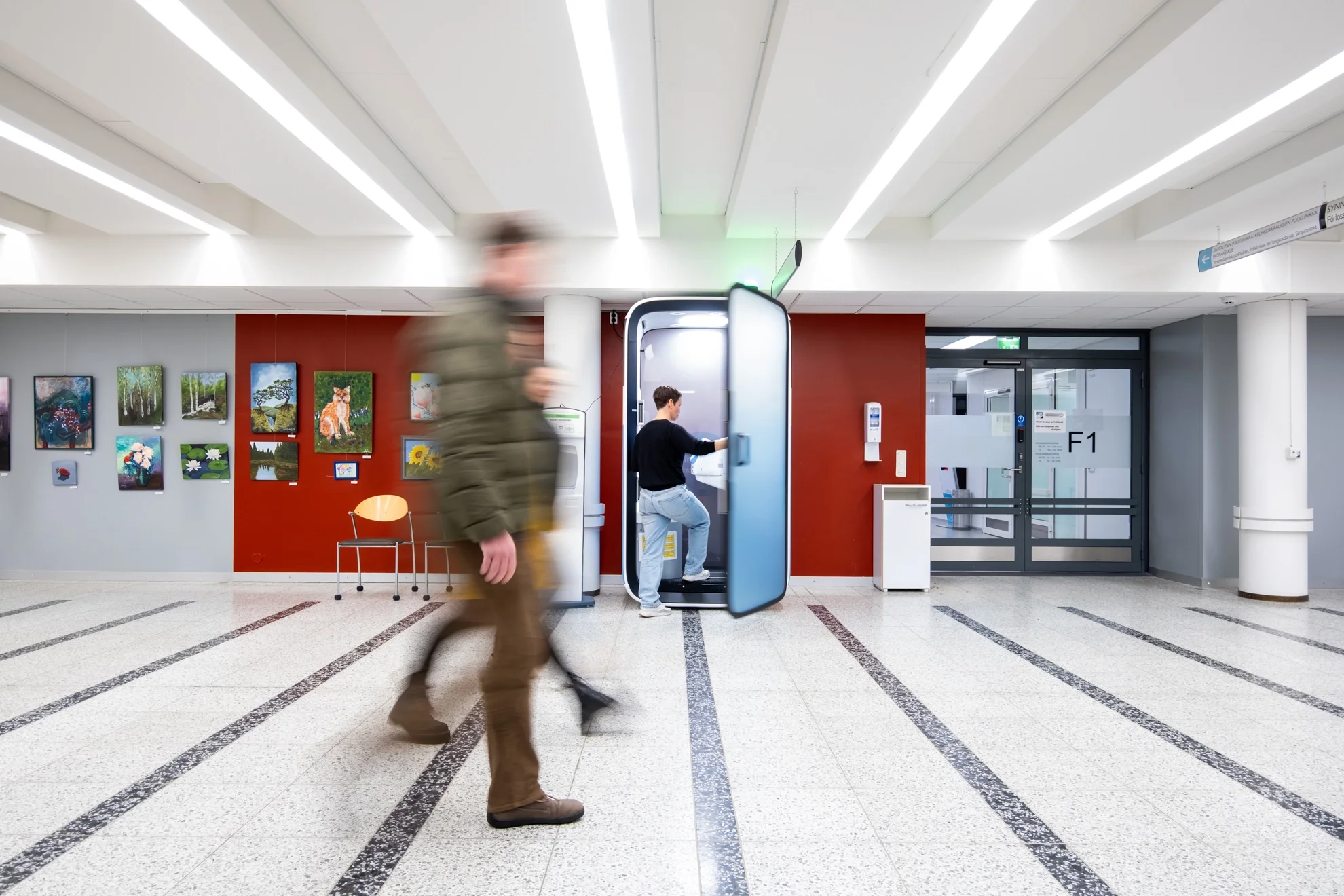
Place the eHealth Station™ in your emergency department waiting area to automate patient intake. The eHealth Station™ provides triage nurses with standardized vitals before the first clinical contact, helping to identify high-priority patients faster, shorten queues, and save 8-15 minutes of staff time per patient.
1. Check-in
Patient has an initial conversation and gets referred to self-measure vitals.
The most acute patients are referred to treatment right away.
2. MedicubeX®
eHealth Station™
Patient answer questions and measures their vital sign in 5 min without assistance

3. Triage
• The most acute patients are identified immediately
• Possibility of referring the patient home or or to nonurgent care


4. More diagnostics if needed*
• X-rays
• Ultrasound
• CT, MRI
• Laboratory tests
5. Appointment
with doctor
• Treatment plan
• Referrals to further treatment, diagnostics test or home
Benefits of self-measuring pods for acute & emergency
✅ Faster & More Accurate Triage
Using self-measuring pods, like the eHealth Station™, allows healthcare professionals to immediately identify and prioritize the most critical patients from the moment they arrive.
Screening patients immediately upon arrival gives healthcare professionals instant access to medical-grade data, ensuring that critical conditions like cardiac events, hypoxia, or severe hypertension are never overlooked. Equipping triage nurses with a complete set of standardized vital signs before the first clinical contact enables faster, more accurate, and data-driven decisions.
✅ Improved Workflow Efficiency & Shorter Wait Times
Automating vitals and intake questionnaires with the Station streamlines triage and cuts patient processing by 8–15 minutes. By removing administrative friction and reducing queues, it allows clinical staff to prioritize what matters most: patient care. Faster assessments mean shorter wait times and a smoother, more efficient journey from arrival to treatment.

More about the eHealth Station™
Get the technical details for the eHealth Station™ delivered straight to your inbox. Choose between our English or German documentation by filling out the contact form in your language of choice.



Measurements patients perform upon arrival in the A&E

-
Helps in the assessment of: strokes, heart attacks, vertigo etc.
-
Helps in the assessment of: arrhythmias, heart attacks, pulmonary embolisms, pneumonia etc.
-
Helps in the assessment of: COPD, pulmonary embolisms, pneumonia, asthma etc.
-
Helps in the assessment of: COPD, pulmonary embolisms, pneumonia, asthma etc.
-
Helps in the assessment of: level of bacterial or viral infection, autoimmune disease, malignancies etc.
-
Overweight and obesity → increases the risk of developing conditions such as type 2 diabetes, cardiovascular diseases, sleep apnea, osteoarthritis, and certain cancers.
Underweight → can indicate malnutrition, eating disorders, chronic diseases (e.g., cancer, lung diseases), hyperthyroidism, or other metabolic disorders.
Rapid weight changes → can indicate changes in fluid balance, for example, from conditions such as heart failure, kidney failure, or liver diseases.
Weight monitoring → helps to assess the effectiveness of lifestyle interventions, medication, or treatment programs (e.g., for patients with diabetes or heart conditions).
-
Helps in the assessment of: arrhythmias, such as atrial fibrillation, long QT, AV-blocks, screening of changes in ECG (Q-wave, U-wave, Bundle branch block, AV-Block) etc.
The MedicubeX eHealth Station™ is an MDR Article 22 Medical System
MedicubeX MHRA Reference Number is 35132
The eHealth Station™’s GMDN® Code is 57960
Basic UDI-DI 64298302262EHLTHSTATION2P