
MedicubeX for
CVD Prevention


Accessible & Accurate CVD Prevention
According to WHO, cardiovascular diseases accounted of 32% of all global deaths in 2022. The European Society of Cardiology (ESC): cardiovascular disease statistics 2025, published on the 19th of May states that:
“In 2023 or latest year with available data, CVD caused >3 million deaths in ESC member countries (1.6 million in females, 1.5 million in males), over half due to IHD and stroke. Disability-adjusted life years lost to CVD reached 68 million in 2023. “
80% of cardiovascular disease is preventable.
Protecting the heart starts with four pillars: a balanced diet, active living, a tobacco-free life, and knowing the heart-health numbers.
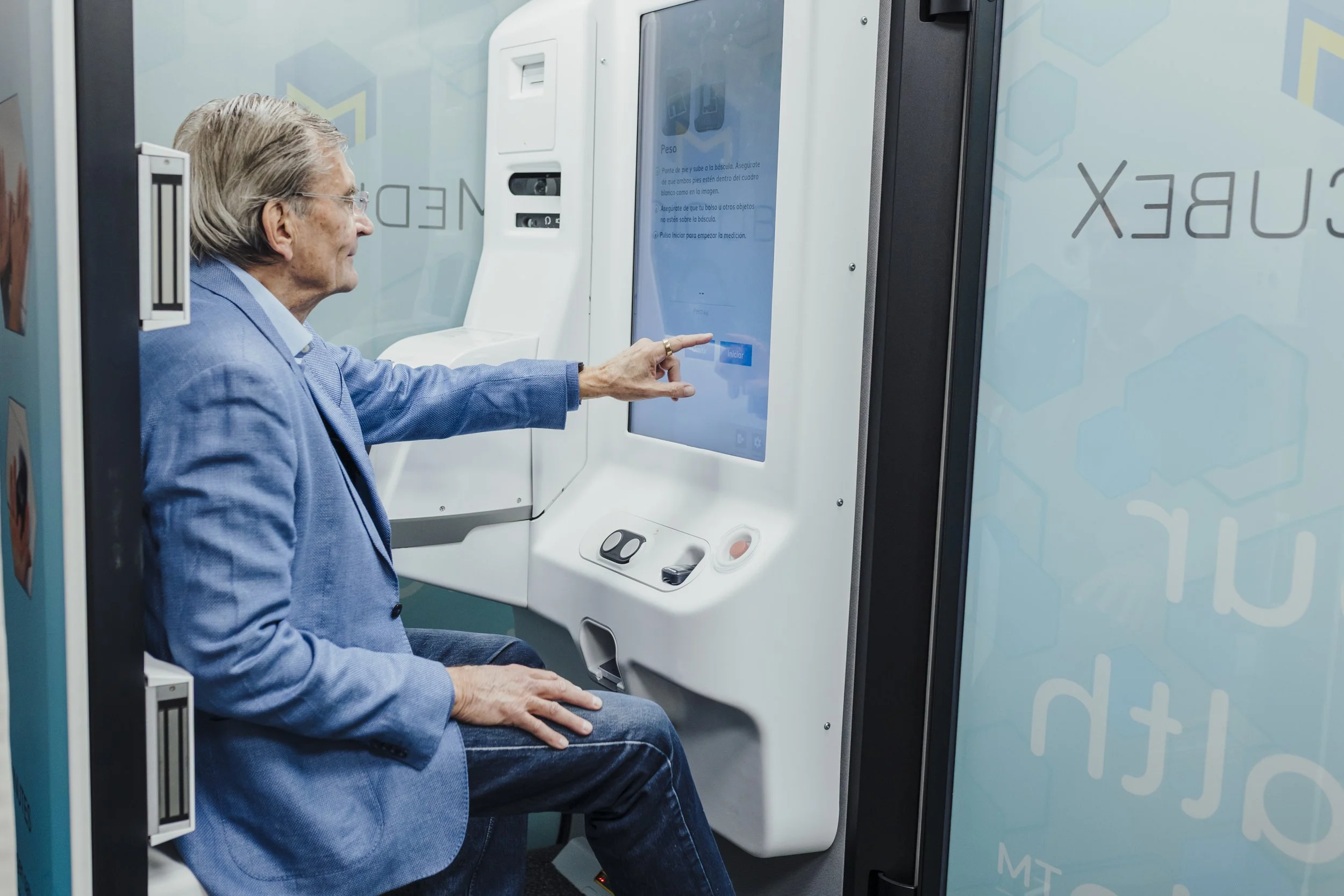
MedicubeX eHealth Station™ is the most accurate non-invasive way to unassistedly screen for cardiovascular diseases and type-2 diabetes in five minutes.


“We believe that the MedicubeX solution is truly groundbreaking and it has all the potential to become a world leading self-measurement station and non-invasive screening tool for cardiovascular diseases and type 2 diabetes.
Cardiovascular diseases are the leading cause of death worldwide. Still there is no solution for easy prevention and screening. MedicubeX has the potential to fill this huge void.”
Univ.-Prof. Dr. med. David M. Leistner,
Director of Cardiology and Angiology
Frankfurt University Hospital


Scalable Solution for CVD Prevention
The MedicubeX eHealth Station™ is a portable, self-service hub that provides users with a fast and comprehensive health assessment, completely unassisted in just a few minutes. The eHealth Station™ measures key vital signs and performs an automated ECG analysis for the screening of cardiovascular diseases.
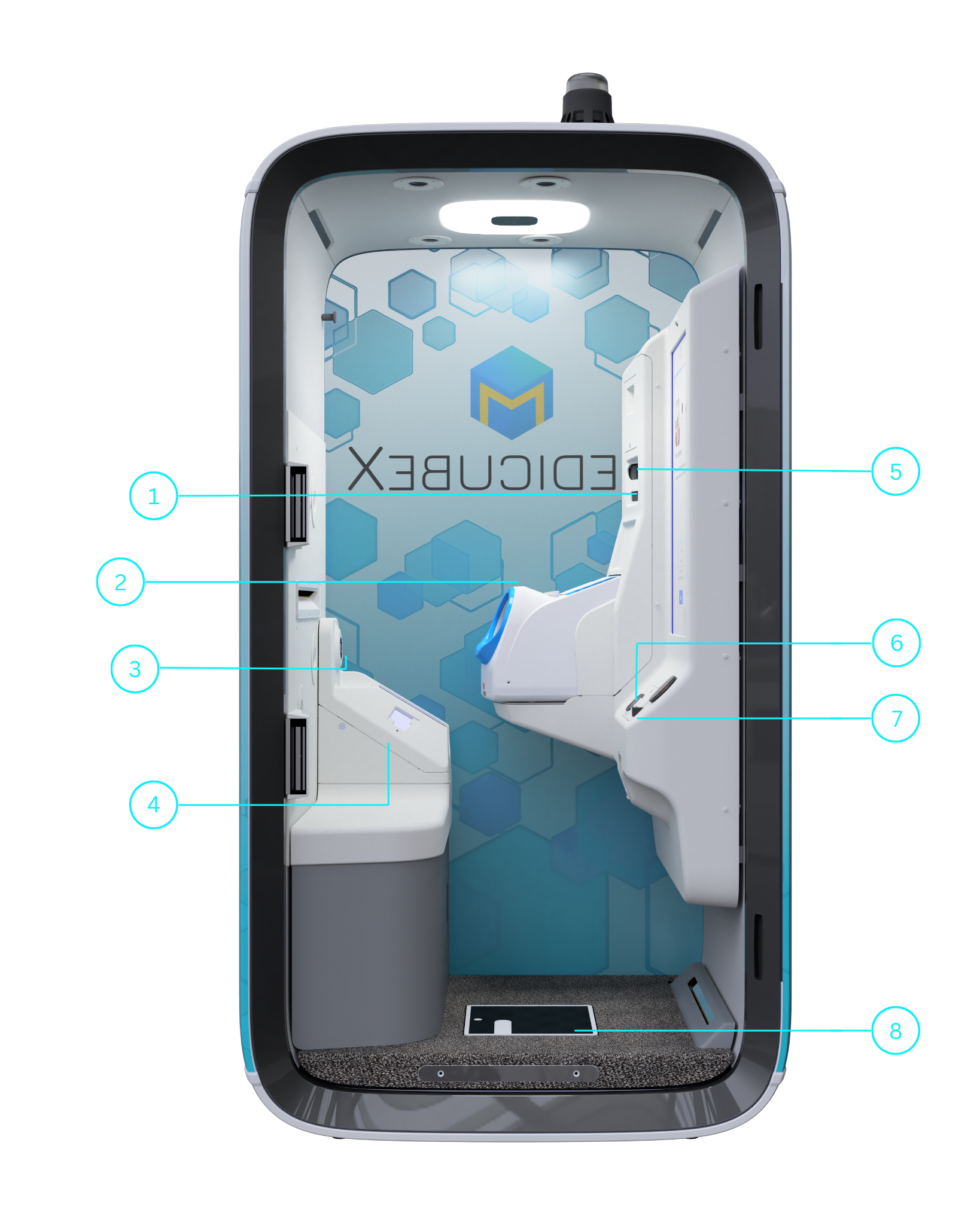

eHealth Station™
an MDR Article 22 Medical System
Body temperature
Blood pressure, Pulse rate
Body fat, Basal metabolic rate
AGE reader: Risk of CVD and T2D
Respiratory rate
ECG: HRV, HR, Rhythm analysis, Arrhythmia detection
Oxygen saturation (SpO2)
Weight
List of measurements



The EU Safe Hearts Plan has set a massive challenge for EU health systems. To tackle cardiovascular disease, the plan targets annual blood pressure measurements for:
✅ At least 75% of people aged 25-64
✅ At least 90% of people aged 65 and older
Even without aiming for 100%, the sheer volume of blood pressure screenings required is staggering.
🔹 It takes 10 minutes to screen one person (BP measurement + weight + survey)
🔹 One healthcare professional can do 6 screenings in an hour
🔹 Healthcare professional can screen 9,660 people annually (working 7h/day, 5 days/week, 46 weeks/year)
🔹One eHealth Station™ can screen over 26,000 people each year.
To hit these targets across the EU’s 350 million adults, over 36,000 full-time healthcare professionals would need to concentrate only on doing blood pressure checks every year.
Similarly, the NHS Health Checks are trying to battle the rising costs of CVDs in the UK.
EU Safe Hearts Plan
Automated CVD Risk Detection
Integrate autonomous health checks into cardiovascular disease prevention programs or make it an integral part of all general health check-ups.
Save the healthcare professionals’ time for interpreting results instead of performing vital sign measurements.
Patients can access the eHealth Station™ in publicly accessible locations to receive a comprehensive CVD risk profile in just 5 minutes. This is preventive cardiology at its finest.
Practical Example of Scalable CVD Prevention Flow
Pre-Appointment CVD Risk Screening:
Patients complete a full vital signs check-up and relevant questionnaires before their consultation. This ensures the clinician has a complete, up-to-date health profile the moment the appointment begins.
CVD-screening program:
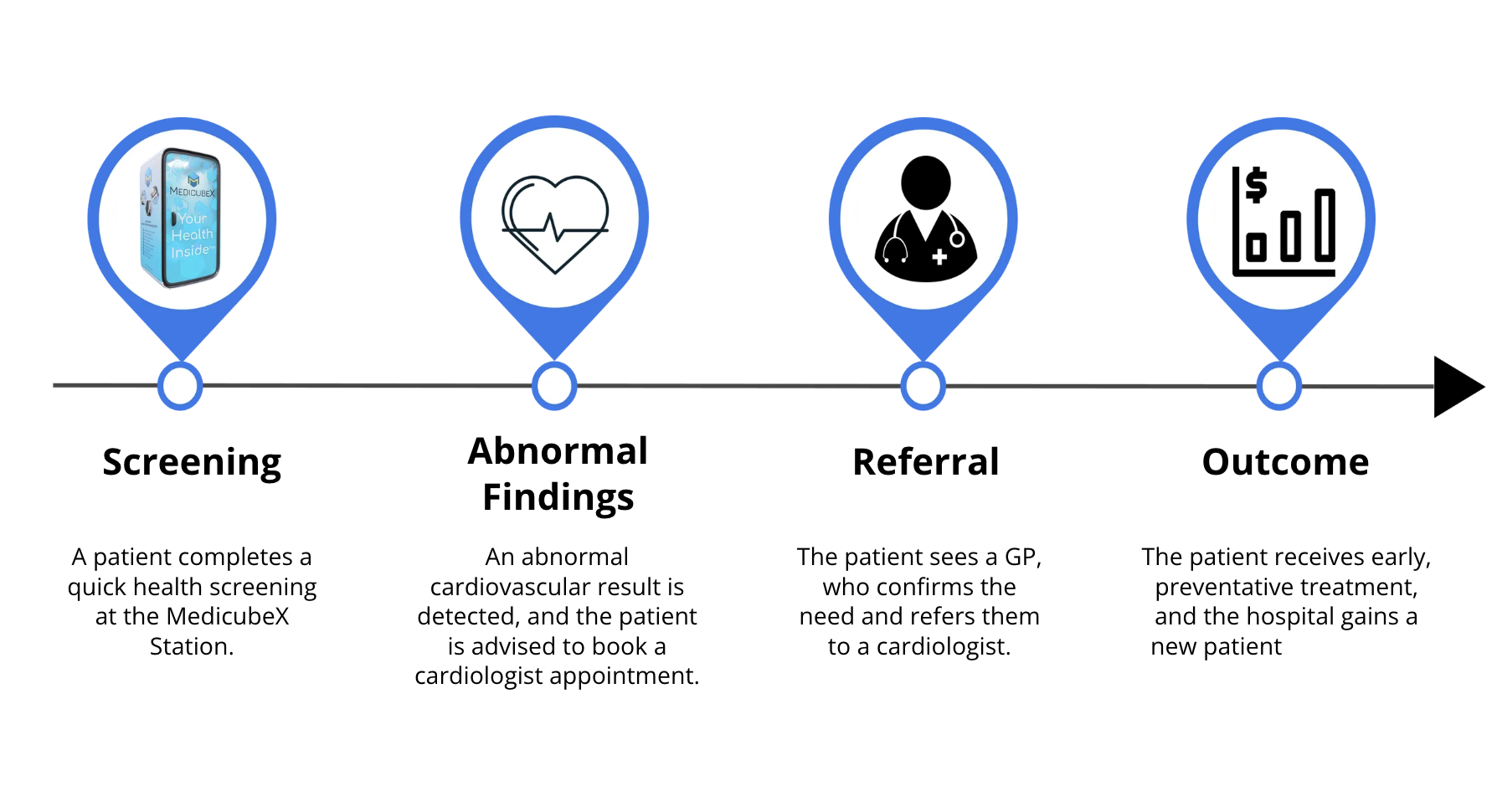
A person enters the eHealth Station™ and gets their CVD-related values measured in five minutes. If all values are within reference values, the person can go home. If not, they are referred to a doctor, who can refer them to a cardiologist, if needed.
Benefits of CVD Prevention
✅ Lives saved: 80% cardiovascular disease is preventable, so CVD prevention has a significant impact on the mortality numbers
✅ Lowered costs for healthcare in the long run: When cardio-vascular disease is treated at its early stages, the overall healthcare costs decrease
✅ Improved Patient Outcomes: Consistent, high-quality data leads to better-informed clinical decisions and more effective management of chronic conditions.
✅ Enhanced Patient Engagement: Involves patients directly in their own care, empowering them to track their progress and supporting positive lifestyle changes.
✅ Research data collection eases: When data collection is automated and standardized as a part of the daily processes, it is easier to get more comprehensive and accurate datasets for research.
Targeted CVD-Screening Programs:
Deploy the eHealth Station™ for specific public health initiatives, such as cardiovascular health campaigns or diabetes risk assessments. The platform allows you to efficiently screen large groups, identify at-risk individuals, and gather valuable data for population health management.
Part of General Health Check-ups:
Offer an accessible, on-demand option for patients and the public to monitor their health proactively. This empowers individuals to take an active role in their own well-being and enables the early detection of potential health risks before they become serious.
Clinical Research:
Utilize the eHealth Station™ to collect high-quality, standardized data from participants in a consistent and efficient manner. The automated process reduces manual errors and streamlines data collection, making it an invaluable tool for a wide range of clinical studies and trials.

More on eHealth Station™ ECG
eHealth Station™ takes a 1-lead ECG from everyone and use AI technology to analyze the rhythm.
The ECG can instantly detect more than 20 different arrhythmias and calculate ECG intervals and complex durations.


-
Normal sinus rhythm
Sinus tachycardia
Sinus bradycardia
Sinus arrhythmia
Pause
-
First-degree atrioventricular block with normal sinus rhythm
First-degree atrioventricular block with sinus bradycardia
First-degree atrioventricular block with sinus tachycardia
-
Premature ventricular contraction
Ventricular couplet
Ventricular triplet
Ventricular bigeminy
Ventricular trigeminy
Ventricular tachycardia
Slow ventricular tachycardia
-
Premature supraventricular contraction
Atrial couplet
Atrial run
Atrial bigeminy
Atrial trigeminy
Atrial fibrillation
Atrial flutter
Supraventricular tachycardia
-
Interventricular conduction delay
Normal sinus rhythm with interventricular conduction delay
Sinus bradycardia with interventricular conduction delay
Sinus tachycardia with interventricular conduction delay


AI Predictive Tools
MedicubeX is developing cardiovascular disease risk analysis algorithms and AI that will help identify the individuals’ CVD risks and enable timely intervention. Proactive treatment can increase the healthy working years of life and improve quality of life.
The development is being made together with VTT Technical Research Center of Finland.


MedicubeX is rethinking CVD prevention by making non-invasive 5-minute health screenings accessible for everyone.


Why are these measurements important for CVD Prevention?

-
Helps in the assessment of: strokes, heart attacks, vertigo etc.
-
Helps in the assessment of: arrhythmias, heart attacks, pulmonary embolisms, pneumonia etc.
-
Helps in the assessment of: COPD, pulmonary embolisms, pneumonia, asthma etc.
-
Helps in the assessment of: COPD, pulmonary embolisms, pneumonia, asthma etc.
-
Overweight and obesity → increases the risk of developing conditions such as type 2 diabetes, cardiovascular diseases, sleep apnea, osteoarthritis, and certain cancers.
Underweight → can indicate malnutrition, eating disorders, chronic diseases (e.g., cancer, lung diseases), hyperthyroidism, or other metabolic disorders.
Rapid weight changes → can indicate changes in fluid balance, for example, from conditions such as heart failure, kidney failure, or liver diseases.
Weight monitoring → helps to assess the effectiveness of lifestyle interventions, medication, or treatment programs (e.g., for patients with diabetes or heart conditions).
-
Helps in the assessment of: arrhythmias, such as atrial fibrillation, long QT, AV-blocks, screening of changes in ECG (Q-wave, U-wave, Bundle branch block, AV-Block) etc.
-
Helps in the assessment of: risk of strokes or heart attacks, risk of type 2 diabetes and it’s complications
-
This helps to assess the risk of type 2 diabetes and its complications, as well as the need for lifestyle interventions. The Basal Metabolic Rate (BMR) is used to evaluate the balance between energy intake and expenditure, which is essential for planning effective weight management and lifestyle strategies.