
Groundbreaking cardiology:
How Heart and Vascular Center of the University Hospital Frankfurt
redefines cardiovascular prevention
Collaboration between University Hospital Frankfurt (UKF) and MedicubeX in a nutshell
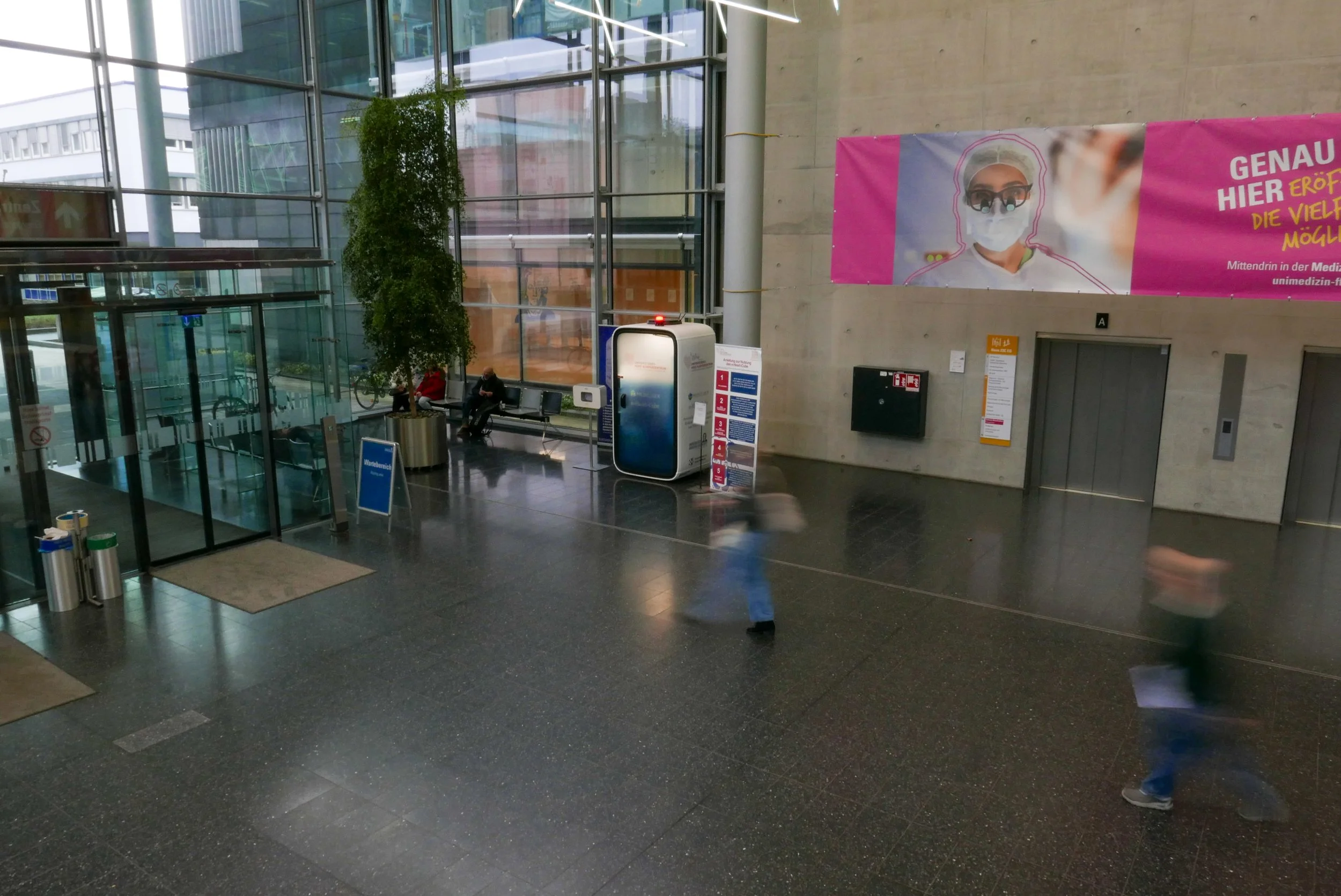
High engagement: Between May 2025 and October 2026, 9,196 total visitors autonomously screened their cardiovascular health parameters at the MedicubeX eHealth Station™ (called e-Heart-Cube at UKF) in the hospital lobby without a healthcare professional.
Direct clinical impact: Among the first ~5,500 users, 150 scheduled outpatient follow-ups at the UKF via the station's QR code, resulting in 17 new diagnoses, 21 medication optimizations, and 1 necessary surgical/cardiac intervention.
Strong research contribution: Over 82% of users (4,366 total volunteers by October 2026) voluntarily donated their anonymized health data, creating a real-world dataset that closely mirrors World Health Organization (WHO) cardiovascular risk statistics.
Operational efficiency: Automating routine health checks create time savings for hospital staff to focus on specialized care, such as diagnosing and treatment.
Community respect: Despite being unsurveilled in a public space, there have been zero vandalism incidences.
Scalability & future rollout: UKF is planning cost-effectiveness analyses, and aims to scale the screening model across other clinics and the broader Rhine-Main region.
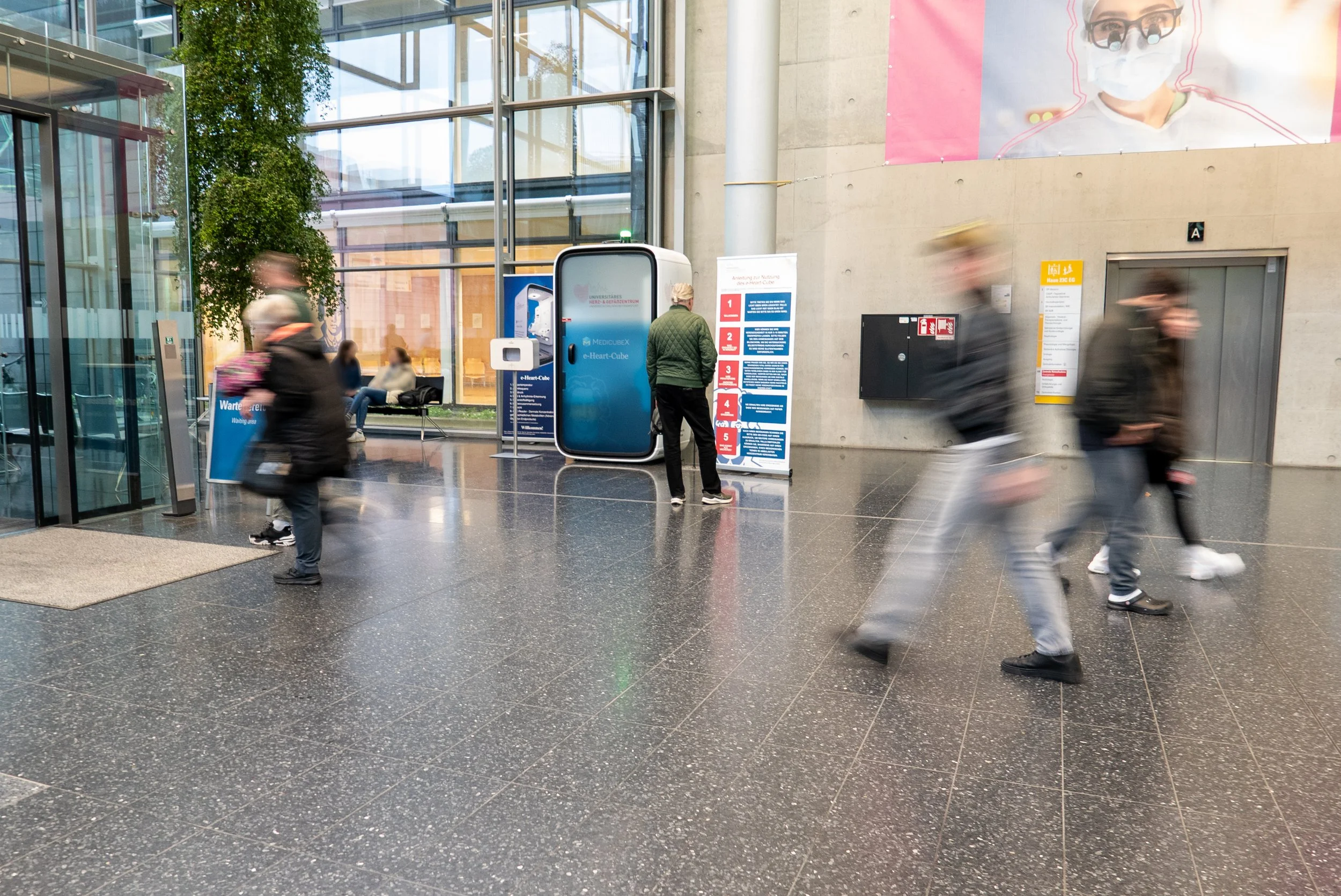
At University Hospital Frankfurt, the future of cardiac medicine doesn't start in the treatment room, but right in the entrance hall. Here, the cardiology department, under the visionary leadership of Professor Doctor David Leistner and the team at the University Heart and Vascular Center, pursues a clear mission: modern precision medicine that is individual and highly personalized to each patient. In an era where patients often wait three months for a preventive check-up, the UKF has forged a groundbreaking path to nip cardiovascular diseases in the bud.
Vision of excellence: Prof. Dr. David Leistner and Precision Medicine
At the University Heart and Vascular Center of University Hospital Frankfurt (in German: Universitäre Herz- und Gefäßzentrum Frankfurt), innovation starts at the top. Under the leadership of Prof. Dr. David Leistner, a leading expert in interventional cardiology and a pioneer in modern cardiac medicine, the department has a clear focus: precision medicine.
For Prof. Dr. Leistner, every patient is an individual; his goal is personalized treatment tailored exactly to an individual's needs.
In line with the hospital's motto, "Knowledge becomes Health," (in German: „Aus Wissen wird Gesundheit“) Prof. Dr. Leistner advances cardiac research and care at the highest international level.
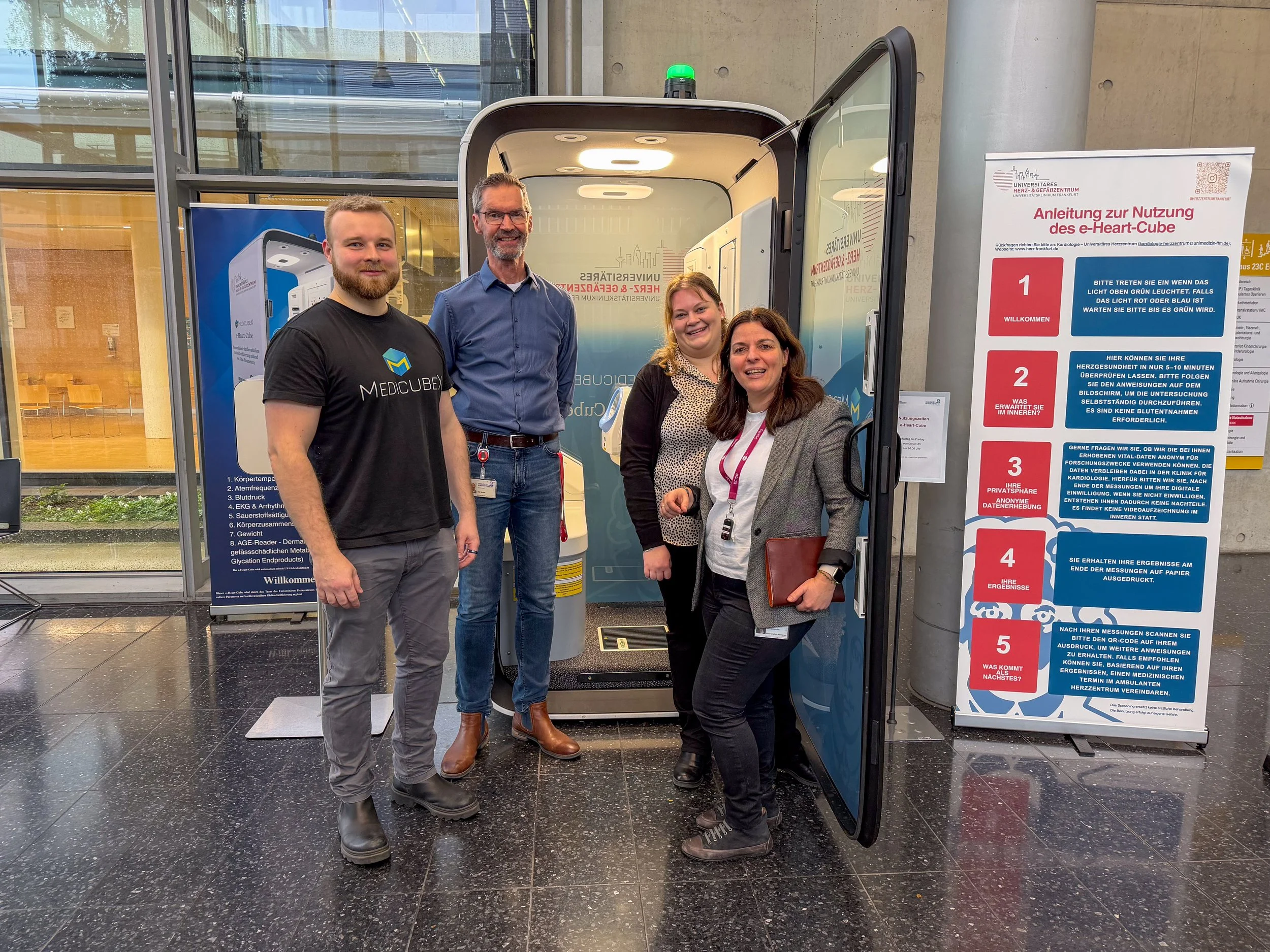
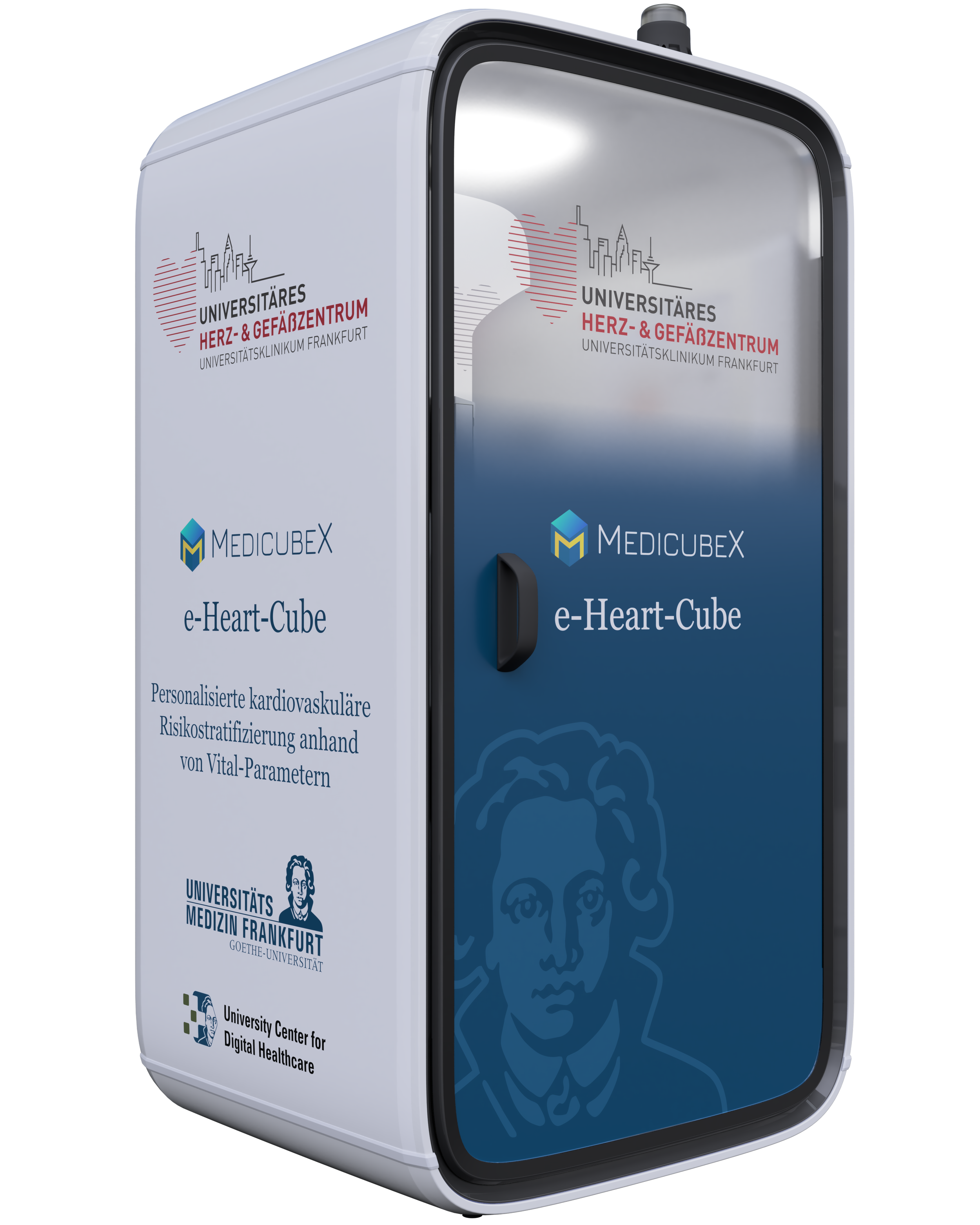
This excellence forms the foundation for projects like the e-Heart-Cube, also known as the eHealth Station™, which was realized under his leadership in cooperation with Dr. Maria Zisiopoulou and technology partner MedicubeX.

Simple prevention instead of long waiting times
Targeted care can prevent many heart problems, but we've lacked a fast way to measure the risks.
The MedicubeX eHealth Station™ fills this gap with an innovative, easy-to-use solution.
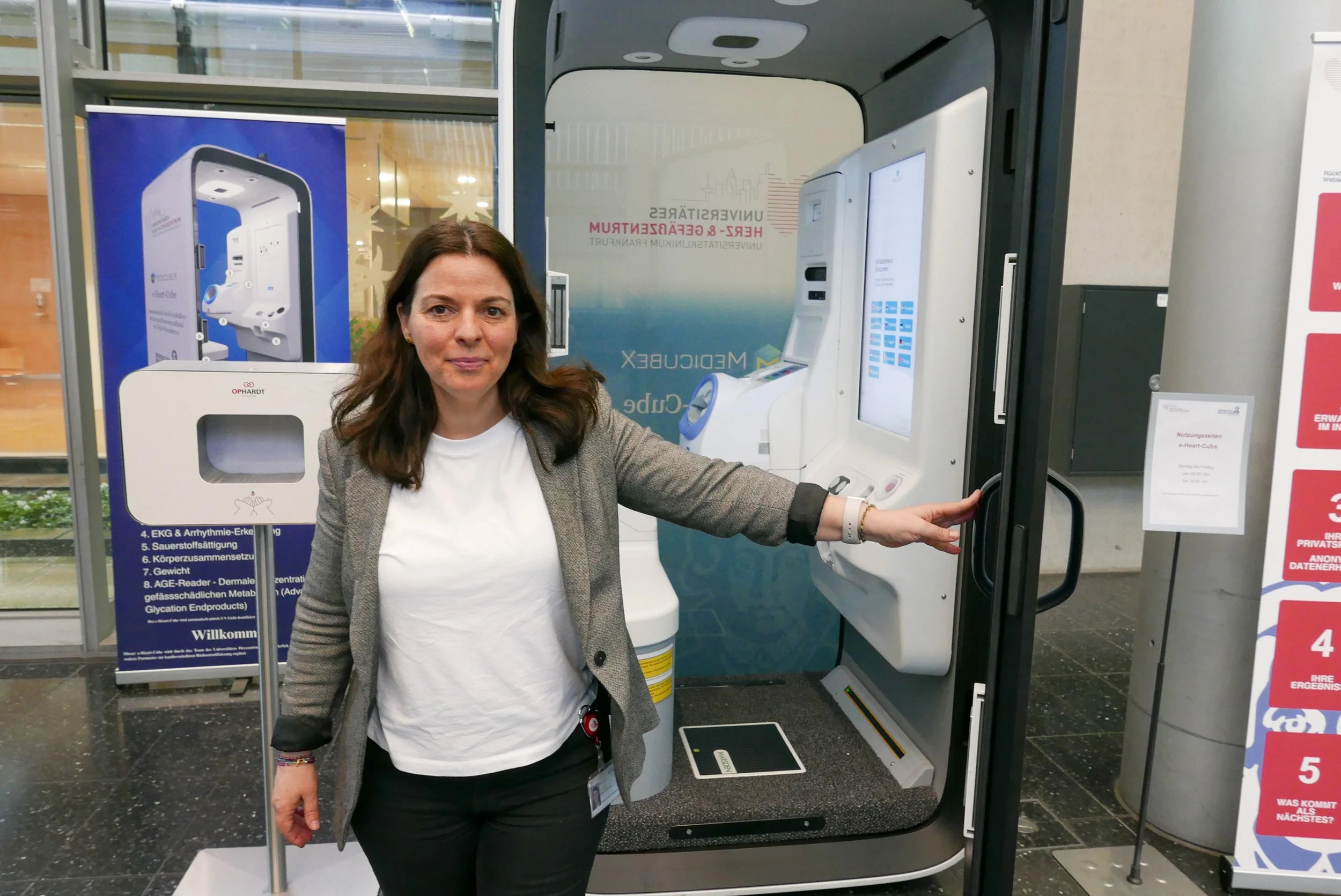
Dr. Maria Zisiopoulou, Clinical Manager and expert in cardiovascular health services research at UKF, describes the necessity of this step:
– Patient numbers are rising while resources are becoming increasingly limited. We must raise public awareness and create simple pathways so that cardiovascular diseases are detected before they require inpatient treatment or even an emergency intervention.
The MedicubeX eHealth Station™ in the UKF entrance hall solves this problem.
It offers all visitors the opportunity to check their own cardiovascular health parameters in real-time, without bureaucratic hurdles or waiting times.
Closing the loop: Digital patient pathway
The eHealth Station™ offers a holistic view of health.
The screening cube offers a private space where users can perform a variety of measurements independently and at their own pace, without the stress of a traditional doctor's visit, and thus without the distorting "white coat effect."
This strengthens personal responsibility and heightens awareness of one's own body.
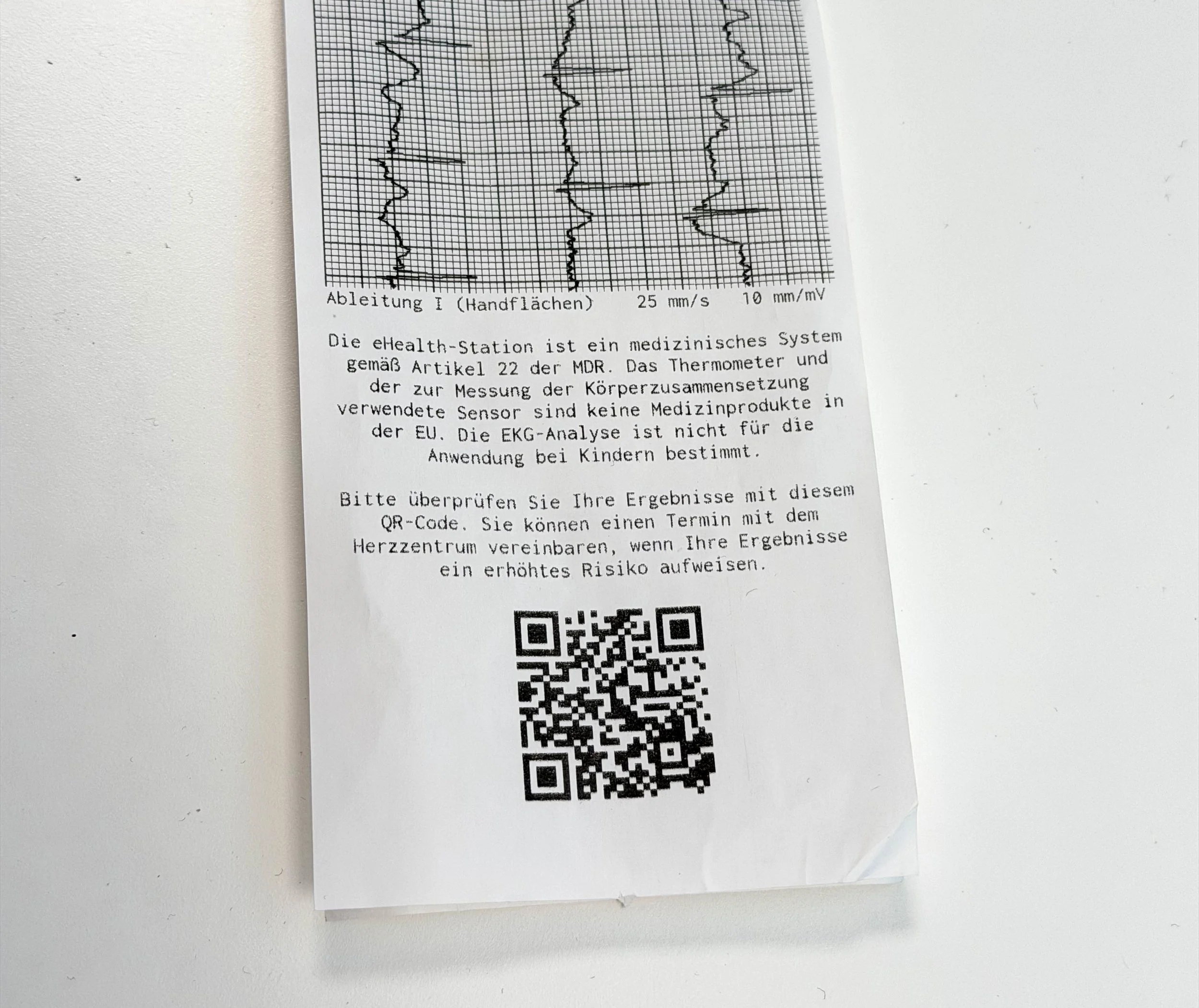
In just a few minutes, vital signs are measured and the results are immediately available for the user as a printout without the need for medical personnel to be present.
However, the patient pathway at UKF goes one crucial step further: it closes the clinical circle (the "loop") by bridging the gap between preventive screening in the reception hall and subsequent medical treatment.
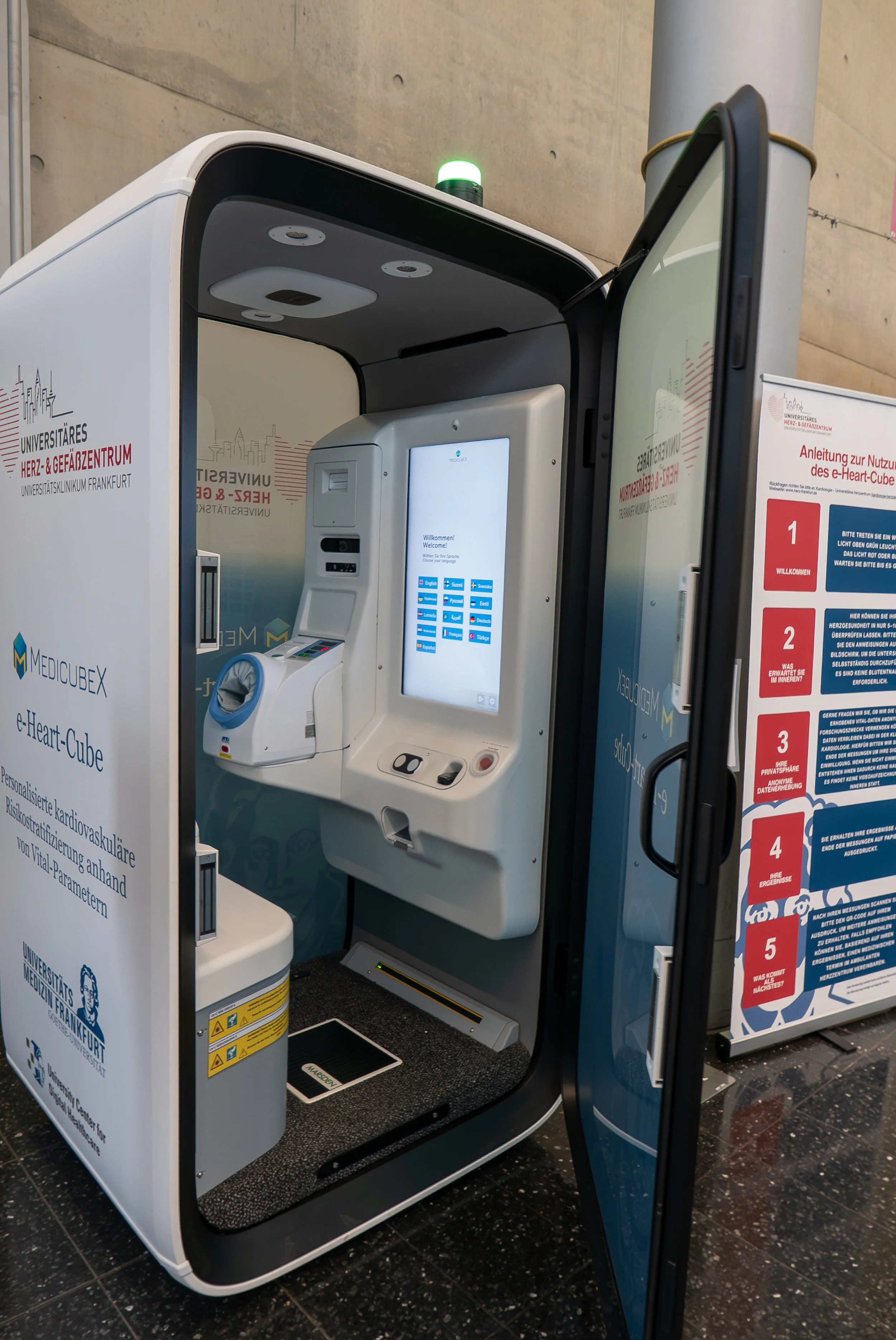
The parameters measured include:
Body temperature
Blood pressure and pulse
Body fat percentage and basal metabolic rate (BMR)
AGE Reader: Risk of cardiovascular disease (CVD) and type 2 diabetes
Respiratory rate
ECG: HRV (Heart Rate Variability), HR (Heart Rate), rhythm analysis, and arrhythmia detection
Oxygen saturation (SpO2)
Weight
Additionally, users answer questions regarding their current physical activity levels as well as their experienced quality of life.
This combination of objective measurements and subjective data helps to generate a precise risk score for cardiac risk stratification.
QR code enables fast access to doctors
At the end of the printout is a QR code that allows users to compare their personal measurements with reference values.
If the results are abnormal, meaning that two defined parameters exceed the set limits, users are advised to schedule an appointment at the cardiology outpatient clinic.
Dr. Zisiopoulou explains the advantage of this digital bridge:
– The fact that you can immediately make an appointment with us in the cardiology outpatient clinic is an area where we have tried to close the loop. We want to provide the opportunity to not only measure and view vital signs but also to take that next critical step.
From measurement to risk stratification
A central element of the concept is the systematic risk assessment.
Data collection: The screening cube precisely measures vital signs using state-of-the-art, integrated medical devices.
Comparison with reference values: Via a QR code, users gain access to clinically defined reference values. This allows them to see at a glance whether their results are within the normal range or whether specialized medical clarification is required.
Closing the loop: If necessary, the next step in the patient pathway is to book an appointment directly at the UKF cardiology outpatient clinic for further investigation.
Impressive results of the feasibility study
The response over the first nine months of having the eHealth Station™ at the hospital lobby was overwhelming and confirms the success of the feasibility study at UKF.
The collaboration started 27.5.2025, and here are the numbers from the start until March 2026, when Dr. rer. med. Zisiopoulou was interviewed.
Over 5,500 users used the eHealth Station™.
150 appointment requests were made via the QR code for further investigation
Measurable clinical success:
17 new diagnoses established
21 patients received optimized or adjusted medication
1 necessary intervention initiated
Overall usage numbers for the eHealth Station™
These numbers are from the start of the collaboration, 27th of May, 2025, until the 1st of October 2026:
May-Dec 2025: 4.660 users
Jan-October 2026: 4.536 users
All time: 9.196 users
The research aspect: Unexpected willingness for data donation
The eHealth Station™ is far more than a mere screening tool. It functions as a valuable source for cardiovascular health services research.
A secure, digital data transmission pathway was implemented in December 2025. At the end of each measurement, users are asked whether they would like to provide their anonymized data to the UKF Cardiology Department for scientific research purposes.
Research data collection with eHealth Station™
In the first three months, 1.200 users donated their data
In five months, 1.931 users donated their data
During seven months, 2.890 users donated their data (December 2025 - June 26th, 2026)
In ten months, 4.366 volunteers gave their data (December 2025 - October 1st, 2026)
While overall adoption has been high, it was particularly encouraging that a majority of users chose to donate their health data to research.
For example, in a five month period:
2.351 total users
1.916 donated their data
This translates to 82,18 % eHealth Station™ users donated their health data for research
Equally encouraging is the total absence of vandalism at the eHealth Station™ despite its high-traffic public location, a clear sign that the community respects and values the MedicubeX eHealth Station™ as a vital health service.
The response far exceeded expectations. Within just a few months, over 1,200 voluntarily donated datasets were collected. Dr. Maria Zisiopoulou is particularly impressed:
– We were very surprised that users were so willing to share their data with us. It is one thing to measure vital signs for oneself and raise one's own awareness. But to actually press the button and say, 'Yes, I give my health data to University Hospital Frankfurt to be researched' was an extremely positive aspect for us. People are not only willing to screen themselves but are actively helping to drive research forward.
These so-called "real-world data" are invaluable to the team.
Initial analyses of the anonymized measurement data revealed that the calculated risk scores closely mirror the population statistics of the World Health Organization (WHO). This not only proves that the e-Heart-Cube is being used by a representative cross-section of society but also confirms the high validity of the integrated medical devices.
With this growing data pool, the UKF is pursuing clear objectives: the results feed directly into further research projects and the medical validation of both new and established risk stratification methods.
In collaboration with MedicubeX, an even more precise patient pathway will be developed in the future, allowing patients to digitally and seamlessly track their health progress over the long term.
Technology and partnership in harmony
A common worry regarding new technology in healthcare is that machines will replace healthcare professionals. However, Dr. Zisiopoulou clarifies that the e-Heart-Cube in no way replaces human expertise or work.
Rather, the system provides targeted relief for daily clinical operations:
– The use of the e-Heart-Cube does not replace healthcare professionals. On the contrary, it allows us to save time by automating the routine measurements so that the medical staff can take on highly specialized tasks.
This successful interplay between human and machine would be unthinkable without the right technology partner. The rapid success of the project is inseparably linked to the close cooperation between the UKF and MedicubeX. Dr. Maria Zisiopoulou praises the professionalism and agility demonstrated during the collaboration:
– Our partnership with MedicubeX is characterized by immense innovative power, professionalism, and attention to detail. The team is available 24/7. No matter what challenge arises, a solution is sought immediately and implemented without delay. This agility is the reason we have achieved such impressive milestones in such a short period of time.
e-Heart-Cube 2.0 and a model for the future
Following the visit of the Hessian Minister of Health and widespread media attention, the team at UKF is looking toward the future.
A crucial next step is a cost-effectiveness analysis to quantify the financial relief provided to the healthcare system through targeted prevention. Parallel to this, the development of the e-Heart-Cube 2.0 is planned, featuring enhanced functions to enable even more precise risk stratification.
Based on the consistently positive results, Dr. Zisiopoulou sees enormous potential for the entire German hospital landscape and recommends this model for adoption elsewhere:
– I would recommend the e-Heart-Cube to other clinics and university hospitals, as it offers simple diagnostic tools that work in any clinical setting.
With this forward-looking project, UKF has impressively demonstrated that innovative prevention is not only feasible, but effectively saves lives and provides long-term relief for the healthcare system.
The project’s ambitions extend far beyond the UKF. The vision is to scale the e-Heart-Cube and establish it as the standard for heart health across the entire Rhine-Main region.
– We would like to use the e-Heart-Cube not only here with us at University Hospital Frankfurt, but also roll it out in Frankfurt and the surrounding Frankfurt area, confirms Dr. rer.med. Zisiopoulou.

“We believe that the MedicubeX solution is truly groundbreaking and it has all the potential to become a world leading self-measurement station and non-invasive screening tool for cardiovascular diseases and type 2 diabetes.
Cardiovascular diseases are the leading cause of death worldwide. Still there is no solution for easy prevention and screening. MedicubeX has the potential to fill this huge void.”
Univ.-Prof. Dr. med. David M. Leistner,
Director of Cardiology and Angiology
Frankfurt University Hospital